2023/6/16
Share to:
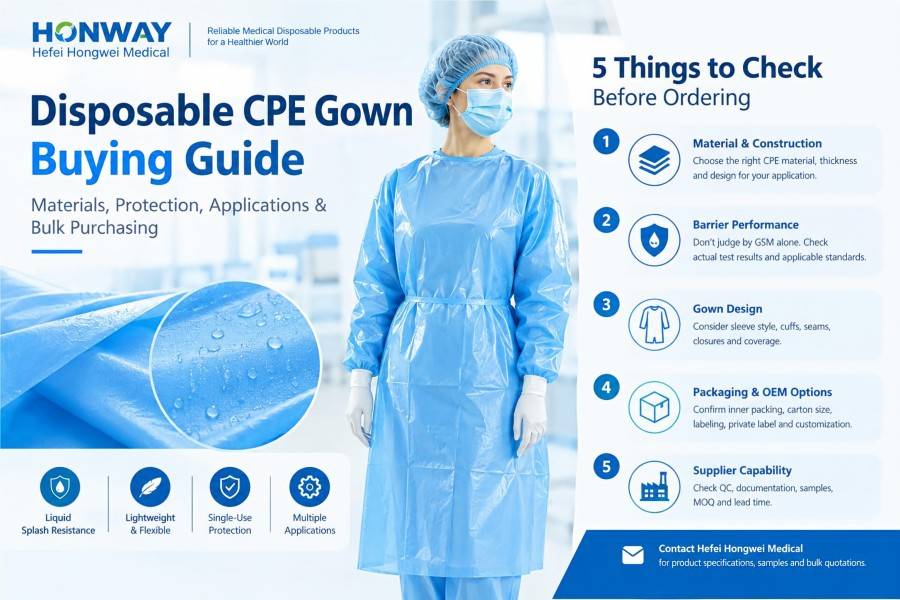
Disposable CPE Gown Buying Guide for Medical Buyers
Disposable CPE Gown Buying Guide: Materials, Protection, Applications & Bulk Purchasing
Disposable CPE gowns are widely used in healthcare, cleaning, food handling, and other environments where liquid splash resistance and convenient single-use protection are important. For importers, wholesalers, distributors, and institutional buyers, choosing the right gown involves more than comparing unit prices. Material quality, thickness, coverage, fit, packaging, and intended application all influence whether a product meets the needs of the end user.
This guide explains what buyers should know about disposable CPE gowns, how they differ from other disposable gown materials, which specifications to evaluate, and what to confirm before placing a bulk order with a manufacturer.
Quick Summary
CPE gowns are made from chlorinated polyethylene film and are commonly selected for liquid splash resistance.
They are suitable for applications where a plastic-film barrier is appropriate, but they are not interchangeable with every medical isolation or surgical gown.
Thickness, coverage, sleeve design, fastening method, and material consistency should be evaluated together.
Buyers should confirm the intended use, applicable market requirements, product specifications, and packaging before ordering.
For wholesale and OEM projects, a written specification and pre-production sample help reduce misunderstandings.
1. What Is a Disposable CPE Gown?
A disposable CPE gown is a single-use protective garment made from chlorinated polyethylene (CPE), a plastic material processed into a flexible film. The gown forms a physical barrier over the wearer's clothing and is commonly used in environments where contact with water or liquid splashes is a concern.
CPE gowns are often manufactured with a pull-over or wrap-style design, elastic cuffs, and a waist or back fastening system. Specific features vary by manufacturer and product model.
Because CPE is a film rather than a fibrous nonwoven fabric, it generally provides a different combination of liquid resistance, flexibility, and breathability compared with PP or SMS gowns. Its performance depends on the film formulation, thickness, garment construction, and quality of manufacturing.
Important distinction: A disposable CPE gown should not automatically be considered a sterile surgical gown or a medical isolation gown with a specified protection level. Buyers need to verify the product's intended use, test results, labeling, and regulatory status before selecting it for a healthcare application.
2. Why Do Buyers Choose CPE Gowns?
CPE gowns offer several practical features for suitable single-use applications. Their value depends on matching the product to the task rather than treating one gown design as a universal solution.
Liquid Splash Resistance
The plastic-film structure can help prevent water and other liquids from passing directly through intact material. However, the protection provided by a finished gown also depends on seams, openings, closures, and coverage. Resistance to a particular chemical or biological hazard must not be assumed without appropriate evidence.
Convenient Single-Use Handling
Disposable gowns can simplify garment handling in workplaces that use single-use protective apparel. They do not require routine laundering for reuse, although users should still follow the facility's procedures for donning, removal, and disposal.
Practical for High-Volume Purchasing
For distributors and institutional buyers, disposable CPE gowns may be purchased in bulk with standardized specifications and packaging. Consistent sizing, material quality, and carton configuration can help simplify stock management and repeat orders.
Multiple Design Options
Depending on the manufacturer, buyers may be able to specify gown dimensions, film thickness, color, cuff style, fastening method, and packaging. These options should be confirmed against the actual product range before quotation.
3. Where Are Disposable CPE Gowns Used?
CPE gowns can be considered for different workplaces where a liquid-resistant outer garment is suitable. The appropriate product depends on the exposure risk and the requirements of the facility.
Healthcare support areas: Selected non-surgical tasks where a CPE garment is appropriate under the facility's protective apparel policy.
Cleaning and sanitation: Tasks involving water splashes and routine cleaning solutions, provided the material is compatible with the substances used.
Food handling: Selected food preparation or processing activities where a disposable outer garment is suitable and permitted by the facility's hygiene requirements.
Laboratory support: Low-risk tasks where the gown's documented properties meet the specific workplace requirements.
General service operations: Work environments that require a convenient, single-use liquid-resistant garment.
CPE gowns should not be selected solely because they are waterproof. Healthcare procedures involving blood, potentially infectious materials, hazardous chemicals, or high-pressure liquid exposure may require a different garment with validated performance for that specific hazard.
4. CPE vs. PE vs. PP and SMS Gowns
Different disposable gown materials have different physical characteristics. Buyers should compare them according to the application, required protection, comfort, and cost.
| Material | General Characteristics | Buyer Considerations |
|---|---|---|
| CPE | Flexible plastic film with liquid-resistant properties. | Check film thickness, flexibility, coverage, and finished-gown integrity. |
| PE | Polyethylene film used in many disposable protective garments. | Compare the specific film formulation, strength, fit, and intended application. |
| PP nonwoven | Lightweight fibrous material commonly used for disposable apparel. | Assess strength, comfort, lint characteristics, and whether additional barrier layers are needed. |
| SMS nonwoven | Multilayer nonwoven construction designed to balance strength, breathability, and barrier properties. | Verify the required barrier performance and test documentation rather than relying on the material name alone. |
There is no single material that is best for every application. CPE may be appropriate when liquid resistance is a priority, while nonwoven materials may be preferred when wearer comfort and breathability are important. The final choice should reflect the task, risk assessment, and verified product performance.
5. How to Evaluate CPE Gown Specifications
Before requesting a quotation, buyers should prepare a clear specification. This makes it easier to compare offers from different manufacturers and reduces the risk of receiving products that do not match the original requirements.
Material and Thickness
Confirm that the product is made from the required CPE material and specify thickness using the manufacturer's stated measurement and tolerance. Film thickness can influence flexibility, strength, weight, and liquid-barrier performance, but it does not establish protection against every hazard.
Size and Coverage
Check garment length, chest width, sleeve length, and the amount of front and back coverage. A suitable gown should allow the intended wearer to move comfortably without leaving unnecessary gaps. If your customers serve different markets, consider whether a range of sizes is needed.
Sleeves, Cuffs, and Closures
Evaluate sleeve length, cuff elasticity, fastening design, and ease of donning and removal. Confirm that seams and attachment points are secure and that the gown remains in place during the intended activity.
Color and Appearance
Color options depend on the manufacturer's product range. For repeat orders, document the approved color and appearance requirements so that later batches can be compared with the accepted sample.
Material Consistency and Workmanship
Look for uniform film, clean edges, secure seams, and consistent dimensions. Obvious pinholes, tears, weak attachment points, or inconsistent construction should be investigated before approving a sample for bulk production.
6. How to Check CPE Gown Quality Before Ordering
A product sample gives buyers an opportunity to check whether the proposed gown matches their specification. For larger orders, establish acceptance criteria before production rather than relying on a general visual inspection after delivery.
Visual inspection: Check for holes, tears, contamination, uneven film, and visible defects.
Dimension checks: Measure the gown against the approved size specification.
Thickness checks: Confirm the measurement method, nominal thickness, and agreed tolerance.
Seam and attachment checks: Inspect cuffs, closures, and other joined areas for consistent construction.
Fit assessment: Check coverage, movement, and ease of putting on and removing the garment.
Packaging inspection: Confirm that the product count, labels, and packaging match the purchase order.
Performance testing: Request relevant test results where the intended application requires documented barrier or physical performance.
Visual inspection alone cannot verify all protective properties. If the gown will be used in a regulated healthcare or higher-risk environment, request the applicable test documentation and verify that it covers the product being purchased.
7. What Medical Buyers Should Confirm About Compliance
Product classification and compliance requirements depend on the intended use and the destination market. A gown sold for general splash protection may be subject to different requirements from a medical isolation gown or surgical gown.
Before purchasing, buyers should clarify:
The intended use and user group.
The destination country or region.
Applicable product classification and regulatory requirements.
Required product labeling and instructions.
Applicable performance tests and supporting reports.
Whether sterile supply is required for the intended use.
Any restrictions relating to food contact, chemicals, or other special applications.
Do not assume that a CPE gown is suitable for surgical procedures, sterile applications, or chemical protection simply because it is waterproof. Confirm the intended use and required evidence with the manufacturer and, where necessary, the relevant regulatory or compliance specialist.
8. Packaging and Logistics for Bulk Orders
For importers and wholesalers, packaging affects more than product presentation. It also influences storage, handling, carton utilization, shipping costs, and inventory management.
When comparing quotations, confirm the following details:
Number of gowns per inner bag or pack.
Number of packs or pieces per carton.
Carton dimensions and gross weight.
Individual packaging requirements, if any.
Product labels, carton marks, and barcode requirements.
Storage and handling instructions.
Lead time, order quantity, and shipping arrangements.
When evaluating cost, compare the complete offer rather than the unit price alone. A useful landed-cost calculation should account for product cost, packaging, freight, duties, and other applicable import expenses.
9. OEM and Private Label CPE Gowns
OEM and private-label options can help distributors build a consistent product range under their own brand. Available customization depends on the manufacturer's capabilities, minimum order quantities, and production requirements.
Possible customization items include:
Gown dimensions and approved design.
Film thickness and material specification.
Color, subject to available materials and production feasibility.
Cuff and fastening options.
Inner packaging and carton configuration.
Private-label artwork and product labels.
Carton printing, shipping marks, and barcode placement.
Documentation requirements for the destination market.
Before approving an OEM order, provide the supplier with a written specification and final artwork. Confirm the sample, packaging, tolerances, order quantity, production schedule, and inspection requirements before mass production begins.
10. How to Choose a Reliable CPE Gown Manufacturer
A reliable supplier should be able to explain the product specification clearly and provide consistent communication throughout the ordering process. For international buyers, manufacturing capability, quality management, documentation, and delivery reliability are all important parts of supplier evaluation.
Before placing a bulk order, consider asking these questions:
Can the supplier provide a detailed product specification?
Are material and thickness requirements documented?
Can samples be supplied for evaluation?
What quality checks are performed on incoming materials and finished products?
Can the supplier provide relevant test reports and compliance documentation?
What are the minimum order quantity and normal lead time?
Can the supplier support repeat orders and agreed product specifications?
Are OEM packaging and private-label services available?
Can the supplier confirm carton dimensions, packing details, and shipping information?
A well-defined purchasing process helps buyers compare suppliers on consistent criteria and reduces the risk of specification changes or misunderstandings during production.
11. Bulk Purchasing Checklist for Disposable CPE Gowns
Use this checklist when preparing a request for quotation or reviewing a manufacturer's proposal.
| Item | Information to Confirm |
|---|---|
| Intended application | Healthcare support, cleaning, food handling, or another defined use. |
| Material | CPE material and any specific material requirements. |
| Thickness | Nominal thickness, measurement method, and tolerance. |
| Size and coverage | Garment dimensions, sleeve length, and coverage requirements. |
| Design | Cuffs, closures, seams, color, and other features. |
| Quality | Sample approval, inspection criteria, and relevant test reports. |
| Compliance | Applicable requirements for the destination market and intended use. |
| Packaging | Pack quantity, carton quantity, labels, dimensions, and weight. |
| Commercial terms | MOQ, price, lead time, payment terms, and shipping arrangements. |
| OEM requirements | Logo, artwork, private-label packaging, and final approval process. |
12. Common Mistakes to Avoid When Buying CPE Gowns
Choosing by Price Alone
Two quotations may describe products that differ in thickness, dimensions, packaging, and quality-control requirements. Compare products against the same written specification before making a purchasing decision.
Assuming Waterproof Means Suitable for Every Hazard
Liquid resistance does not automatically establish protection against chemicals, infectious materials, or high-risk clinical exposure. Match the garment to the task and confirm any required test evidence.
Ignoring Fit and Coverage
A gown that is too short, too tight, or poorly secured may not provide the coverage or mobility required. Evaluate samples under realistic conditions before approving a large order.
Overlooking Packaging Details
Unclear pack quantities, carton dimensions, or labeling instructions can cause avoidable problems during receiving, warehousing, and distribution. Include packaging details in the purchase order.
Placing a Large Order Without Approving a Sample
Sample approval gives both parties a clear reference for product appearance, dimensions, and workmanship. For repeat orders, retain the approved specification and use agreed inspection criteria to monitor consistency.
Conclusion
Disposable CPE gowns can be a practical choice for applications that require a single-use, liquid-resistant outer garment. The right product depends on the intended task, required coverage, material characteristics, construction, and applicable compliance requirements.
For importers, wholesalers, and institutional buyers, a sound purchasing decision starts with a clear specification. Confirm the material and thickness, review garment dimensions and workmanship, assess relevant test documentation, and agree on packaging and delivery requirements before production.
If you are sourcing disposable CPE gowns for your product range, work with a supplier that can explain the product specifications, provide samples, and support your purchasing requirements with clear documentation.
Looking for a Disposable CPE Gown Supplier?
Hefei Hongwei Medical supplies disposable medical and protective products for international B2B buyers. Contact our team to discuss product specifications, samples, bulk orders, and OEM or private-label requirements.
Email: phyllis@honwaymed.com
Explore our products: Disposable Gowns
Frequently Asked Questions
What is a disposable CPE gown used for?
A disposable CPE gown is used as a single-use outer garment in selected healthcare support, cleaning, food handling, and other work environments where liquid splash resistance is appropriate. The suitability of a specific product depends on the task and the gown's documented performance.
What is the difference between CPE and PE gowns?
CPE stands for chlorinated polyethylene, while PE generally refers to polyethylene. Both can be used in film-based disposable garments, but their physical characteristics depend on the material formulation and manufacturing process. Buyers should compare the actual product specifications rather than relying on the material name alone.
Are CPE gowns breathable?
CPE gowns are made from plastic film and are generally less breathable than many nonwoven gowns. The level of wearer comfort depends on the garment design, thickness, coverage, and working conditions.
Can CPE gowns be used as surgical gowns?
Not automatically. Surgical use may require specific product classification, barrier performance, labeling, sterility, and regulatory compliance. Buyers should confirm that the product is explicitly intended and validated for the proposed application.
What should buyers check before ordering CPE gowns in bulk?
Check the intended use, material, thickness, dimensions, design, workmanship, relevant test reports, packaging, minimum order quantity, lead time, and shipping terms. Request a sample and confirm the final specification before mass production.
Can disposable CPE gowns be customized for OEM orders?
Customization may include dimensions, thickness, color, packaging, labels, and private-label artwork, depending on the manufacturer's capabilities. Confirm available options, minimum order quantities, and production requirements before placing an OEM order.
News Center
Industry News


 WhatsApp
Send us your message
You can send an email asking for the price and detailed information of this product. We will reply you as soon as we receive your email